Parents searching for special schools for autism near me are usually doing it at 11 PM, after a day that included a meltdown, a teacher’s note, or a comment from a relative that stung more than it should have. That search is rarely casual. It comes from wanting one clear answer: is this place actually going to help my child, or is it just another building with a nice website?
There isn’t a single right answer for every family. But there are specific things worth checking when you tour a center, and most parents don’t know to ask about them until they’ve already picked the wrong ones.
Table of Contents:
What Should Special Schools for Autism Near Me Actually Offer?
The phrase “special school” gets used loosely online. The term ‘special school’ can describe different types of support. Some providers operate dedicated schools, while child development centres may offer special education alongside therapies such as speech, occupational and behavioral therapy.
That distinction matters because it changes what you should ask during a visit. A special education program works well when it’s built around your child’s individual profile, not a fixed curriculum everyone follows at the same pace. According to the World Health Organization, autism affects how a person communicates, learns, and interacts, and support needs vary widely between individuals. So the first thing to check isn’t the building. It’s whether the assessment process actually shapes the plan or whether every child gets the same worksheet.
Ask How the Assessment Actually Works
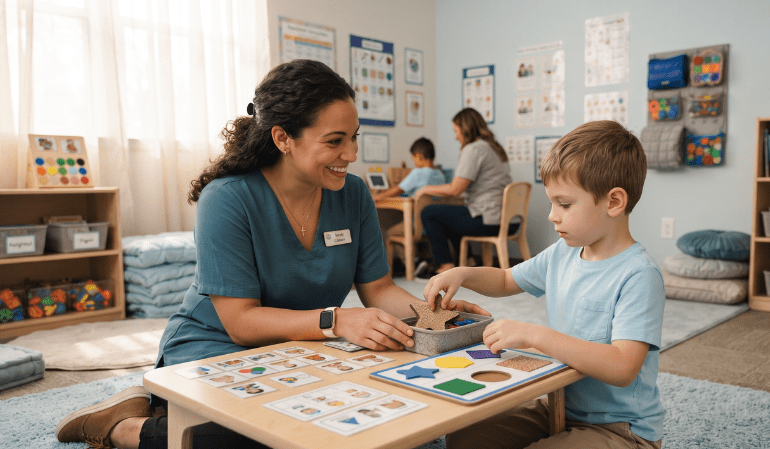
A center should walk you through what happens before therapy even starts. At AIMS, initial evaluation typically involves several sessions, sometimes four or five, to understand how a child responds across different areas before therapy begins in earnest. If a place promises a diagnosis and a plan in a single 20-minute visit, that’s a red flag, not efficiency.
Ask specifically: who is in the room during the assessment? Is it one generalist or a small team covering speech, behavior, and daily living skills separately? Multidisciplinary input tends to catch things a single evaluator misses.
Look at How Behavioral Support Is Integrated
Behavioral therapy shouldn’t sit in isolation from everything else your child is doing. Structured approaches such as Applied Behavior Analysis and Functional Behavioral Assessment work best when they’re coordinated with speech and occupational goals, not run as a separate track with its own staff who never talk to the education team. When touring, ask how often the behavioral therapist and the special educator actually meet about a shared case. If the honest answer is “rarely,” that tells you something about how the center actually operates day to day.
Assess the Environment, Not Just the Brochure
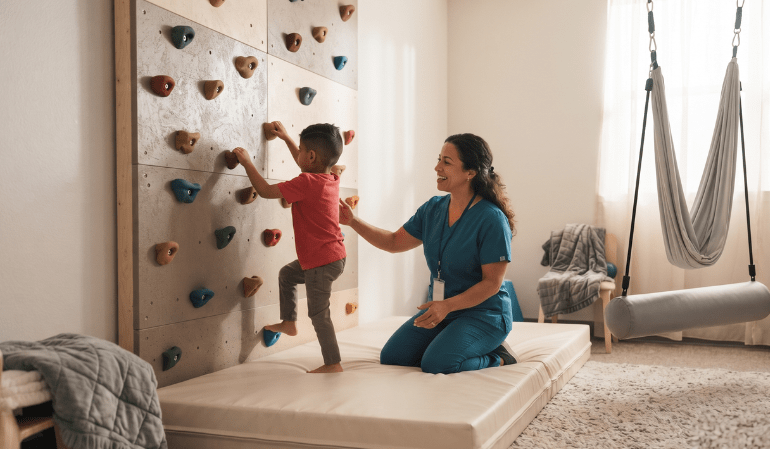
Walk the actual space. Is it loud in a way that would overwhelm a sensory-sensitive child? Are there quiet corners for a child who needs to step back mid-session? Staff tone matters here more than equipment. Watch how a therapist speaks to a child who’s having a hard moment during your visit, not just the ones who are calm and cooperative that day. This is usually the detail that separates a genuinely good fit from a place that only looks right on paper when you search special schools for autism near me and click the first result.
Ask About Family Involvement
Progress rarely sticks if it only happens inside a therapy room. A program should have a clear system for parent updates, ideally a regular meeting after sessions where you can ask direct questions and hear what’s actually being worked on. Vague monthly newsletters aren’t the same as a therapist sitting down with you and explaining specific goals.
Consider Whether Online Sessions Are an Option
For families juggling long commutes or a child who struggles with new environments, online therapy sessions can bridge gaps between in-person visits. It’s not a replacement for hands-on occupational or behavioral work, but it can matter for consistency, especially during illness or travel.
Final Thoughts
Touring a center is uncomfortable. You’re evaluating strangers to help with something deeply personal, often while your child is right there watching you do it. Ask the specific questions above rather than general ones like Are you good with autism? Specific questions get specific answers, and specific answers are what actually tell you whether a place fits your child.
What’s the one question you wish you’d asked before your last school visit?
FAQ
Are special schools for autism near me the same as special education programs?
Not always. Many centers labeled this way in search results are actually child development centers offering special education services alongside therapy, not standalone schools. It’s worth asking directly what the daily structure looks like before assuming it’s a full school.
How long does it take to see progress after starting therapy?
It depends heavily on the child and the type of therapy. Counselling based changes sometimes show up quickly, while behavioral and speech therapy usually take longer and progresses gradually across sessions rather than all at once.
What age should a child start special education or behavioral therapy?
Age plays a real role in how therapy is planned, but many programs begin support from infancy onward when early signs are noticed. Earlier support generally gives more time to build foundational skills before school transitions happen.
Can parents sit in on therapy sessions?
Policies vary by center, but strong programs actively encourage parent involvement, often through post-session meetings where therapists explain what was worked on and why. Ask about this directly during your tour rather than assuming.
Do these centers only support autism, or other conditions too?
Most child development centers support a range of needs, including ADHD, speech delays, and general developmental differences, not autism alone. A multidisciplinary team is usually built to handle overlapping conditions rather than one narrow diagnosis.