

A toddler sits through a family wedding with a tablet propped against a water jug. Cousins run past, and a parent wonders what that screen means for social development in early childhood. The honest answer is mixed. Screens are one factor among many, and no single article can say whether your child is on track. Here is what social skills look like at each age, where devices can get in the way, and when a professional opinion makes sense.
Table of Contents:Development in a young child is not one track. Movement, emotions, play, language and social ability all grow together, which is why a childhood development center usually looks at all of them in one assessment instead of one at a time. The toddler years run from about one to three. The preschool years run from three to five.
Social skills at this stage are small and practical. A child looks at you when you speak. She waits her turn with a block. He answers a question, follows a simple instruction, plays besides other kids and slowly starts playing with them.
One simple way to track this is to compare movement, communication and social interaction against your child’s age. If one area lags, the other two deserve a closer look. Checklists from public health bodies give a rough map of what most children do by a given age.
Where Screens Can Crowd Out Social Development in Early Childhood
Social skills are learned through back and forth. A parent talks, the baby babbles, and the parent answers. A video does not wait for a reply.
The World Health Organization advises no sedentary screen time for one-year-olds and no more than an hour a day for ages two to four, with less being better. The same guidance names reading, storytelling, singing and puzzles with a care as time that matters for development.
Screens are rarely the whole story. Trouble tends to start when they replace the small exchanges that carry social development in early childhood: mealtime talk, a shared picture book, and a clumsy game of catch with a cousin. A tablet used for a video call with grandparents is a different thing from one that fills every quiet gap in the day.

Signs Worth Raising With a Professional
Some behaviors deserve attention whatever the screen habits at home. Speaking less than other children of the same age is one. Poor eye contact, trouble following instructions, and understanding very little even when things are repeated are others. A child who cannot make herself understood often pulls away from other kids, so speech and social skills are tied together.
For families comparing speech therapy Kerala options, the age question comes up first, and the usual advice is to start early. Support can begin anywhere from six months to three years, and the first two years are described as the stage when brain development is at its maximum.
Feelings count as much as words. Sudden irritability, frequent anger outbursts, crying easily, pulling away from friends or losing interest in favourite games can all point to a child who is struggling. Child counselling at this age leans on play, because play is a child’s natural language, and parents stay involved throughout. It is a space to express feelings without fear of being judged, not a label that something is wrong.
What an Assessment Looks Like
Parents often picture a single appointment with a verdict at the end. It rarely works that way. A first evaluation can take four or five sessions, sometimes more, because the team needs to see how the child responds to different activities. Progress is then reviewed regularly with the parents in the room.
Parental involvement matters here. Children tend to settle into therapy more easily when a parent is part of it, and fear of the unfamiliar drops.
Everyday Habits That Protect Social Time
Nothing here needs special equipment.
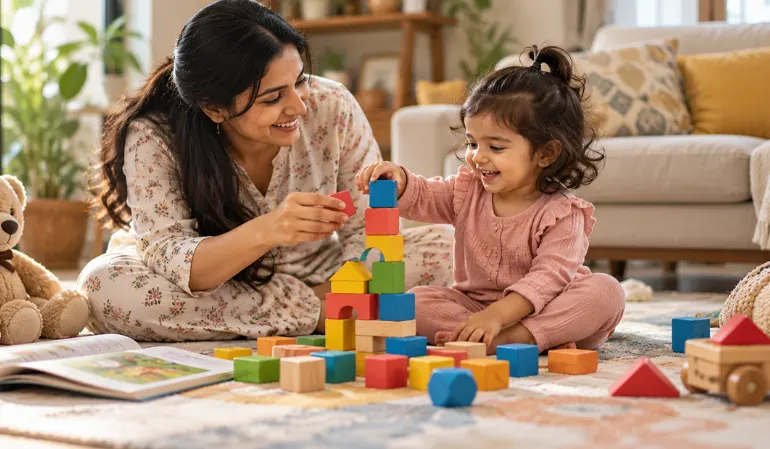
Keep meals free of devices so conversation has room. Watch together when a screen is on, and talk about what you saw afterwards. Trade some screen minutes for floor play, songs or picture books. Let your child lead a game and follow along, even when the rules make no sense to you.
No habit here promises a particular outcome, and every child moves at their own pace. This article is general information. It does not replace an assessment by a qualified paediatrician, speech-language pathologist or child counsellor.
Final Thoughts
A screen is a tool, and young children learn social skills from people. If the day has room for a few more real conversations, that is usually a good start, and if something feels off, asking early costs little. Teams such as the one at AIMS in Pattambi, Kerala, begin with an assessment before suggesting anything else.
What is one moment in your child’s day where a conversation could replace a screen?
FAQ
How much screen time is okay for a toddler?
Less is better. The WHO says none for one-year-olds and up to an hour for ages two to four. Watching together beats solo scrolling every time.
Can tablets cause a speech delay?
Not on their own, as far as one article can say. Delays have many causes. If your child is quiet or hard to understand, get a proper assessment instead of guessing about gadgets.
When should I take my child to a speech therapist?
Sooner than most people expect. Support can start from about six months. Go if your child talks less than same-age kids, rarely makes eye contact, or struggles to follow simple instructions.
Does a shy child need counselling?
Shyness alone usually isn’t the signal. Watch for sudden mood swings, frequent outbursts, pulling away from friends, or dropping games they used to love. Then a counsellor can help, mostly through play.
What happens at a first visit to a development team?
An assessment comes first. The team looks at movement, speech, play and emotions. Expect four or five sessions before a clear picture forms, and parents can talk through progress along the way.
What Do Social Skills Look Like Between One and Five?