

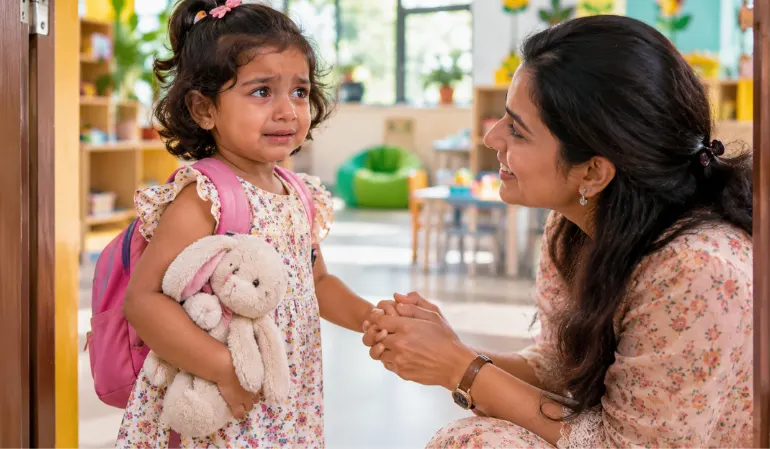
Watch a school gate at 8:45 on the first Monday of the term and you will see the whole picture. A small hand grips a sleeve. A parent crouches and promises to be back soon. Behind that scene sits social and emotional development in early childhood, the gradual process of learning to manage big feelings and to trust people outside the family. Separation anxiety is one visible part of it. School readiness is another. This guide explains how the two connect, what to watch for, and which professionals can help when worry lingers for weeks.
Table of Contents:What Separation Anxiety Looks Like in Young Children
Separation anxiety is the distress a child feels when apart from a parent or familiar caregiver. In preschoolers it often shows up as crying at the door, clinging, or a flat refusal to go in.
Emotional development in childhood never moves in a straight line, so one rough morning proves little. Patterns matter more. Child counselling guidance lists signs worth noticing: sudden irritability, frequent anger outbursts, crying easily, pulling away from friends, and often wanting to stay home or refusing school. A teacher mentioning that a child joins in less than before is another clue.
Some children hide it well. They worry about upsetting their parents, so distress can sit behind a quiet morning. Emotional and psychological development in early childhood includes learning that a parent who leaves will also come back, and that lesson takes repetition. Preschool covers ages 3 to 5, which is usually when daily separation first becomes routine.
Readiness is often reduced to letters and numbers. A classroom also asks a child to answer a question, follow a direction, wait for a turn, and ask for help. Those skills rest on feelings and language together.
Communication sits at the centre. Speech therapy Kerala families consider often begins with a list of signs. A child who does not speak like same-age peers, struggles to interact with other children, cannot answer questions clearly, makes little eye contact, or does not follow commands may be finding group life harder than it looks. A speech therapist assesses the child and builds a personalised plan. Therapy can begin between six months and three years, and the first two years are described as the period of fastest brain development. Clear expression also builds confidence at school and in social settings.
Learning needs to shape feelings too. A child who struggles to focus or read can grow anxious about school long before anyone names the cause. Special education responds with an individual plan, usually inside a regular classroom with extra help such as more time on tests or one-on-one support. Inclusive classrooms also build social skills, teamwork, and a sense of belonging. Parents, teachers, and specialists write the plan together and revise it as the child grows, so progress in social and emotional development in early childhood is easier to track when everyone shares notes.
Practical Steps Parents Can Try Before Term Starts
None of these replace an assessment. They are small, low-pressure ways to practise.
- Draw a picture checklist for the morning. Visual aids and step-by-step lists make routines easier to follow.
- Teach school words early, such as line, bell, and snack time. Pre-teaching vocabulary makes lessons feel familiar.
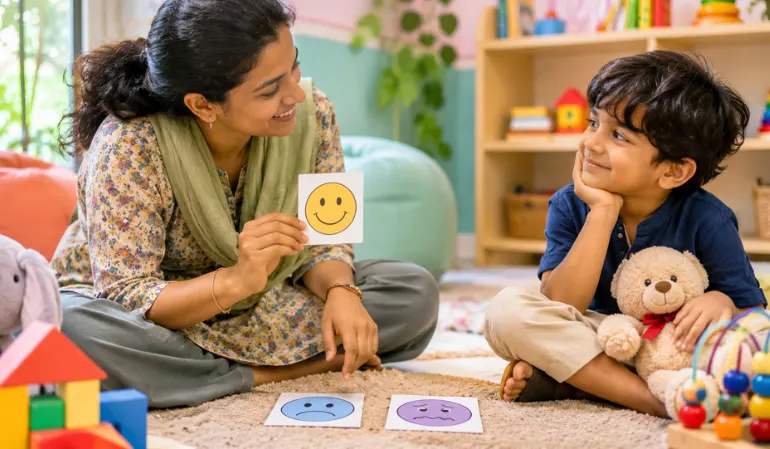
- Rehearse goodbyes through play. Counsellors call play a child’s natural language, so a toy farewell can prepare for the real one.
- Try bubble breathing, slow breaths as if blowing one large bubble.
- Let your child pick one small goal, like hanging the bag on the hook alone.
- Use the same goodbye every day, because repetition and steady routines help.
Progress rarely runs in a straight line. Some weeks the gate gets easier, then a long holiday undoes it. Set goals your child can actually meet, neither too ambitious nor too timid, and count a walk to the classroom door without tears as a result.
Knowing When Home Routines Are Not Enough
Some worries are hard to sort out at the kitchen table. A child counsellor gives your child a private space and an adult who will not judge whatever comes out. Sessions run on play, so a child who cannot yet say why mornings feel scary can show it instead. The counsellor guides without telling the child what to do, and parents stay in the loop. That last part counts, because involved parents help lower a child’s fear of therapy itself.
An initial evaluation may take four or five sessions, sometimes more, because it takes time to see how a child responds. Counselling can show changes quickly in some cases, while speech therapy often takes longer. Parents can usually sit down with the professionals after a session to go through the findings and talk about next steps.
Seek help promptly if a child talks about hopelessness or self-harm or shows risky behaviour. This article offers general education, not a diagnosis. A paediatrician or qualified child development professional can assess an individual child.
Final Thoughts
Settling into school takes time, and every child sets a different pace. Watch for patterns, practise small routines at home, and ask early when something feels stuck. This article draws on educational material published by AIMS (https://www.aimscdc.in/). What is one small goodbye routine your family could try this week?
FAQ
How do I know if my child's clinginess at school is normal?
Look at patterns, not single days. A few tears after a long break are common. Weeks of school refusal, anger outbursts, or pulling away from friends are worth raising with a counsellor or paediatrician.
Can speech problems make school drop-off harder?
Yes, they can add stress. A child who cannot explain feelings or follow instructions may feel lost in class. A speech therapist can assess communication and suggest a plan.
What does a child counsellor do with a young child?
Mostly play. Games and breathing activities help a child express feelings without pressure. The counsellor guides instead of instructing, and parents stay informed.
When should a child start getting help?
Sooner usually helps. Speech therapy can begin between six months and three years, and counselling suits a child whose mood or behaviour shifts suddenly. An assessment decides what fits.
Does special education mean leaving the regular class?
Often not. Many children stay in regular classrooms and get extra support, like more time on tests or one-on-one help. Some spend part of the day in a smaller group.
How Social and Emotional Development in Early Childhood Supports School Readiness