

Could play truly serve as a covert tool that aids in children’s development of lifelong abilities such as cooperation and creativity in addition to being enjoyable?
Play is much more than just amusement even though it may appear to be just fun and games. Play is an effective means of learning development and growth for kids. Every minute they spend playing shapes their minds, bodies and personalities from fostering social and emotional intelligence to increasing creativity and problem-solving abilities.
This blog will examine why play is not only a child’s hobby but also a crucial component of their future.
Table Of Contents:
What Is Play?
Play is an organic activity that is vital to children’s development and education. It is regarded as a crucial interaction that fosters children’s social mental and physical development in addition to being amusing. Children can directly experience new things while playing as well as hone their creativity and critical thinking abilities.
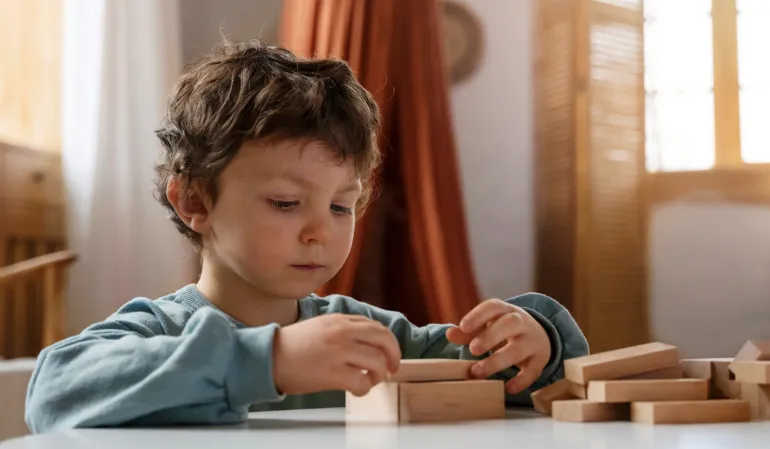
Play includes many enjoyable activities like building with blocks, storytelling music, acting, drawing and so forth. Children’s development and learning can be substantially aided by every opportunity they have to freely experiment, create and mimic.
The Importance Of Play In Child Development
The mental, physical, social and spiritual development of children is greatly aided by play. Children acquire problem-solving techniques as well as creativity and critical thinking abilities through play. Playing with friends also fosters the development of social skills like communication, sharing and cooperation. Play is vital for the development of the body. Children’s endurance, heart health and physical strength are strengthened through active pursuits like ball games, running, jumping and wrestling.
Furthermore, play helps kids develop their self-esteem and confidence. Children learn and feel happy in their minds through self-directed experiments, imaginative play and intriguing chemistry. For this reason it is crucial to give kids limitless play opportunities in order to support their development and education.
Play for developing physical health:
- Children’s physical skills and health can be developed through play.
- Children’s muscles and heart health are strengthened by active pursuits like running, jumping, wrestling, ball games and cycling.
- This improves endurance and body composition.
- Children also develop their motor skills balance and coordination through imaginative play.
- Children need play that incorporates exercise and regular enjoyment to develop both mentally and physically.
- Physical activity alone cannot guarantee children’s growth and well-being.
- It is obvious why play is so important for kids’ physical development.
Play for developing social skills:
- Children learn to communicate, work together, share and have courage around other people when they play with their friends.
- Through organized activities role-playing games, drama and group activities kids can develop friendships, learn how to work as a team and solve problems together.
- Children also have the chance to feel other people’s emotions and comprehend the needs of their friends.
- By exchanging experiences they gain social awareness and learn how to build strong relationships in society.
- Children gain psychological stability and self-confidence as a result of this social learning making them ready to integrate into society and form wholesome relationships.
Play for developing emotional stability
- Children’s emotional growth and mental stability are greatly aided by play.
- As they play they gain firsthand knowledge of a variety of emotions and practice controlling them including joy, excitement, patience and sadness.
- Unrestricted enjoyable play without undue pressure boosts children’s self-esteem and self-awareness.
- Children learn empathy accuracy and problem-solving skills through storytelling theater music and fantasy games.
- Children engage in these creative activities that foster mental safety and improve their capacity for self-control and conflict resolution.
- Therefore play is crucial to children’s overall development and mental health.
Different Ages And Its Stages Of Play And Development
| Age | Stage | Benefits |
|---|---|---|
| Babies & Infants | Play at this stage primarily consists of sensory activities (hearing, seeing, and touching). Babies are able to read, hear, touch, feel, and grasp objects. These modest routine activities set the stage for their social, mental, and physical growth. | Sensory development, motor skills, language ability, security and confidence, excitation, and exploration. |
| Toddlers | Children grow increasingly independent and discover new things during the toddler stage (ages one to three). Play at this stage is mostly through imaginative and engaging activities that help them grow both mentally and physically. | Language development, social skills, problem-solving and creativity, and imaginative development. |
| Preschool | During the preschool stage (ages three to five), children establish a clear sense of direction in their cultural, mental, physical, and social development. Play helps them grow in independence, creativity, and critical thinking abilities. | Development of the mind, language abilities, social growth, creativity, and imagination. |
| School-Aged | Play plays a vital role in physical, mental, social, and cognitive development during the school-age period (around age six and above). It develops into structured and sophisticated activities that support ongoing growth. | Cognitive and mental capacities, social abilities, self-assurance and self-worth, creativity, and imagination. |
How To Help Your Child To Play?
- Give kids toys that they like and a safe environment in which they can play and experiment without restraint.
- Give kids a set period of time during the day to play freely and have fun.
- Their ability to think creatively and critically will grow as a result.
- Playing with their parents teaches them cooperation, sharing and social skills. Provide novel experiences.
- A child develops a variety of skills through varied play which includes puzzles, blocks, art projects, dance music and sports.
- Puzzle logical games and construction activities are examples of complex games that help kids improve their thinking and problem-solving abilities.
- Children should be trained in a fun way while playing free from pressure or coercion.
- Their self-assurance and self-control will increase as a result.
FAQ
Depending on the age and ability of the children, allowing them to play freely and actively for at least one or two hours each day is beneficial for their physical and mental development.
Along with classroom instruction play is a crucial part of a child’s development of their social, mental, physical and creative abilities.
Technology-based games can frequently improve hearing vision and attention but more time should be set aside for independent active physical activities.