
Every parent wants their child to learn, play and grow with confidence. Some children need a little more help to get there, and that is perfectly fine. The importance of special education lies in giving these children the right support at the right time, so they can reach their own goals instead of being left behind. This guide explains what special education is, who it helps, how it works, and how families in Kerala can get started.
What Is Special Education?
Special education is teaching that is planned around one child’s needs. It does not follow a single plan for everyone. Trained special educators study how a child learns, find where the child struggles, and build lessons that suit those needs.
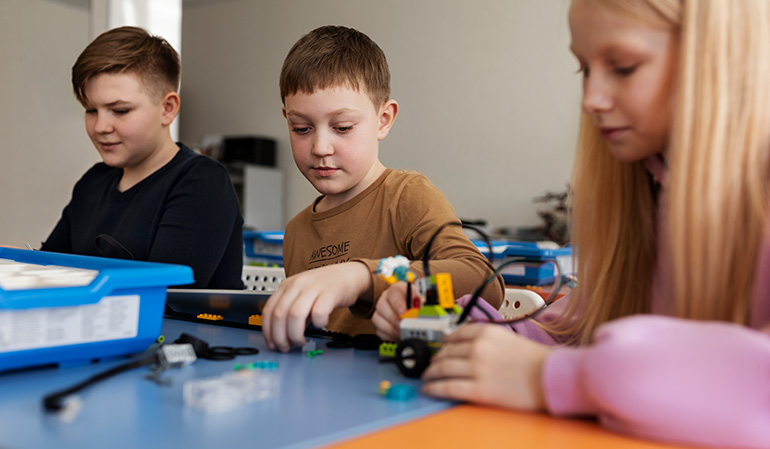
The aim is simple. Each child should learn in a way that makes sense to them. Lessons usually happen in small groups or one-to-one, with clear steps, pictures, play and plenty of practice. They can take place in a centre, a school or at home.
Which Children Can Benefit?
- Learning difficulties, such as trouble with reading, writing or maths
- ADHD, which can make focus and sitting still hard
- Autism, which can affect communication and play with others
- Speech and language delay
- Developmental delay in movement, thinking or behaviour
- Slow progress in school without a clear reason
Why Special Education Matters
The importance of special education becomes clear when you look at what happens without it. A child who struggles and gets no support often loses interest in learning. The child may feel “not smart enough,” avoid school, or act out because they cannot explain their frustration.
These problems tend to grow with time. When help starts early, many children catch up faster and begin to feel proud of what they can do. Early support also saves families a lot of worry later.
Key Benefits of Special Education
-
Learning at the child’s own pace
Lessons move at a speed the child can manage. Hard topics are broken into small steps, so the child does not feel rushed or lost.
-
Better communication
Many children learn to express needs, feelings and ideas more clearly. This reduces tantrums and makes daily life calmer at home.
-
Stronger confidence
Small wins add up. A child who finally reads a full sentence or finishes a task alone starts to believe in their own ability.
-
Improved focus and behaviour
Routines, visual schedules and simple rules help children stay on task. Over time, they learn to manage their energy and emotions.
-
Social skills and friendships
Group activities teach children how to take turns, share and listen. These skills help them make friends at school and in the neighbourhood.
-
Independence in daily life
Special education also covers everyday skills such as following instructions, managing time and looking after personal needs. These skills stay with a child for life.
Progress is fastest when everyone works together. Teachers see how a child behaves in class. Parents see the child at home, at play and at rest. When both share what they notice, the special educator can plan better lessons.
Parents do not need to be experts. Reading together, practising short tasks, keeping a steady routine and praising effort all make a real difference. Patience matters more than perfection.
Support Beyond the Classroom
Special education works best when it is paired with other therapies. Many children also gain from speech therapy, occupational therapy, behavioural therapy and counselling. The team decides which mix suits each child after the assessment.
Not every family can travel to a centre every week. For these families, online therapy offers live sessions from home. The child works with a trained therapist on screen while a parent sits nearby and learns the tasks to repeat during the week.
How AIMS Child Development Centre Helps
AIMS Child Development Centre in Pattambi, Kerala, supports children with a team of trained professionals. The centre offers special education, speech therapy, occupational therapy, behavioural therapy, counselling and developmental assessments.
Every child starts with an assessment. The team then builds a plan around the child’s strengths and needs, shares clear updates with parents, and adjusts the plan as the child grows. The goal is steady progress in a warm and safe setting.
Why is special education important for children with learning difficulties?
These children often cannot keep up with the pace of a regular class. Special education breaks lessons into smaller steps and uses methods that match how the child learns. This helps them build skills, avoid falling behind and keep their confidence.
Which children can get special education support?
Any child who finds learning, speech, behaviour or social skills hard can benefit. This includes children with learning difficulties, ADHD, autism, speech delay or general developmental delay. A formal diagnosis is not always needed to begin an assessment.
When should I speak to a professional about my child?
Speak to a professional when you notice a pattern, such as slow speech, trouble following instructions or constant struggles in school. Do not wait for the child to grow out of it. Starting early gives your child more time to build skills.
Can special education be combined with other therapies?
Yes. Many children receive special education along with speech therapy, occupational therapy or behavioural therapy. The team looks at the whole child and builds one plan so that all support works together.
Is online therapy a good choice for children who need extra support?
For many families it is. Live sessions from home save travel time and let children learn in a place they find comfortable. Parents can also take part and practise the tasks. Some children may need face-to-face sessions too, and the therapist will advise you after the assessment.
Nam vel lacus eu nisl bibendum accumsan vitae vitae nibh. Nam nec eros id magna hendrerit sagittis. Nullam sed mi non odio feugiat volutpat sit amet nec elit.
Nam vel lacus eu nisl bibendum accumsan vitae vitae nibh. Nam nec eros id magna hendrerit sagittis. Nullam sed mi non odio feugiat volutpat sit amet nec elit.